it'sHospitality
ihCities
AI travel companion
it'sHospitality ran in-person concierge services for hotels and restaurants. ihCities put that concierge in every traveler's pocket, with an AI guide named Charlie, plus ihPro, a portal for the businesses behind the trip.
- Role
- Director of product design, sole designer
- Focus
- Mobile app, Travel, AI


The problem
Concierge service lived in luxury hotels, so most travelers and venues never had one
What I did
Designed ihCities and ihPro end to end, from shadowing hotel staff to the app, its AI guide Charlie, and the business portal
What changed
A real business with a growing base of travelers, then a Hyatt integration that put ihCities in guests' pockets
My part
- Shadowed concierges, front desk staff, and managers
- Designed the app, Charlie, and city check-in
- Designed ihPro alongside the developers
- Supported the venue and Hyatt integrations
Who I worked with
- CEO
- Chief technology officer
- A regional hotel director
- Marketing
01 · Why it matters
A five-star trip shouldn’t need a five-star hotel
Travel planning is split across dozens of apps, sites, and agencies. A good concierge pulls it all together: the dinner reservation, the tour, the ride, the hidden spot only locals know. But concierges live almost entirely in luxury hotels, and they’re expensive.
it’sHospitality already ran in-person concierge services for hotels and restaurants. To reach more travelers and more venues, faster, the team built two products: ihCities, an app for travelers to explore a city and manage their trip, and ihPro, a portal for the businesses serving them.
Even if you don't stay at a five-star hotel, your trip should still feel like one
02 · Research
Learning from the front desk
Because the company worked inside local hotels and restaurants every day, research didn’t start from a survey. It started on the floor. The product team went into hotels and shadowed the people who keep them running: concierges, front desk staff, general managers, and catering and food managers. Watching their actual day showed which tools would make them faster, and which ones guests were quietly missing.
Those visits, plus conversations with guests and owners across Washington, D.C., surfaced a few things:
- Neighborhoods win togetherA restaurant netting 4 to 6% profit usually had another within 1,000 feet doing just as well.So recommendations should lift the whole block, not just one venue.
- The trip starts before check-inInternational travelers plan 7-night stays up to 88 days ahead.So the experience begins at booking, not at the front desk.
- Concierge is rare, and it matters98.1% of hotels don’t have one, and hotels with a helpful one earn 1 to 2 more stars in reviews.So give every guest a concierge, and every hotel the reviews that come with it.
Out of every 100 hotels
Has a conciergeDoesn’t
98.1%Of hotels have no concierge at all
The market in Washington, D.C.
+20% a year, expected tourism growth
- 24.6M
- Visitors to Washington, D.C.
- $5.9B
- D.C. tourism revenue
- $1.9T
- U.S. tourism revenue
44%
of people aged 18 to 35 travel with their children
Visitor and revenue figures for 2019
03 · The people
Three travelers, one city
Leisure travelers, often families, juggle a pile of tools to plan. Business travelers need to track every expense. And the leaders running hotels and venues need to coordinate staff, vendors, and paperwork, often on paper.
Leisure traveler
Usually several people traveling together, often with children, sharing the experience. Used to juggling a pile of tools and services to book a trip.
NeedsOne place to plan, book, and get help
Business traveler
Travels on the company’s dime, so every expense needs tracking. Usually has at least one business meal on the schedule.
NeedsPlans and spending in one place
Company leadership
Leads and signs off on some or all of the operations at a property. Works across digital tools and paper, and is always looking for a better way to stay organized.
NeedsStaff, vendors, and paperwork, off paper
The part travelers never see
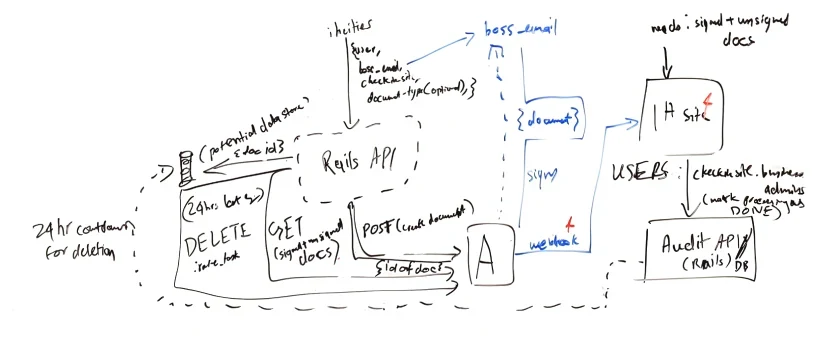
This is where the shadowing paid off most. The managers behind the scenes were juggling vendors, contracts, and orders by hand. So for the businesses, ihPro handled the unglamorous work: exchanging, signing, and tracking documents with vendors through a DocuSign integration, with the data flowing back into payroll, HR, and ordering. Design worked right alongside the developers to map how it all connected, starting on an actual whiteboard in the D.C. office.
04 · Designing it
Four tabs, and a guide
The app came down to four simple places: Home, Explore, Planner, and Check In. Wireframes tested that structure first, starting with a question in the very first sketch: “Name the bot!”
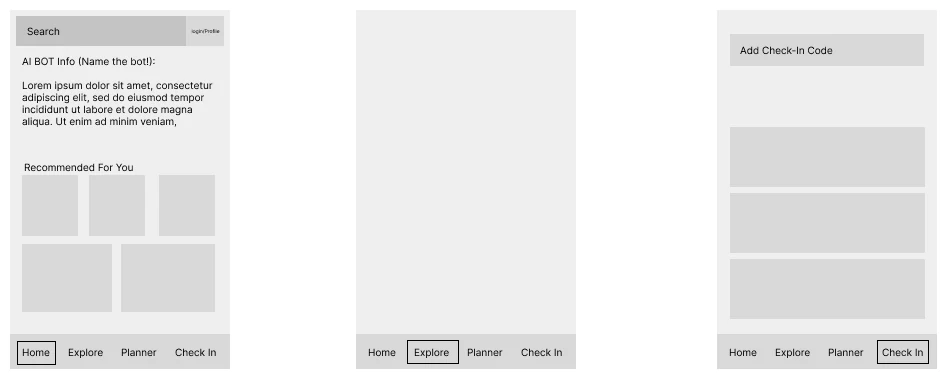
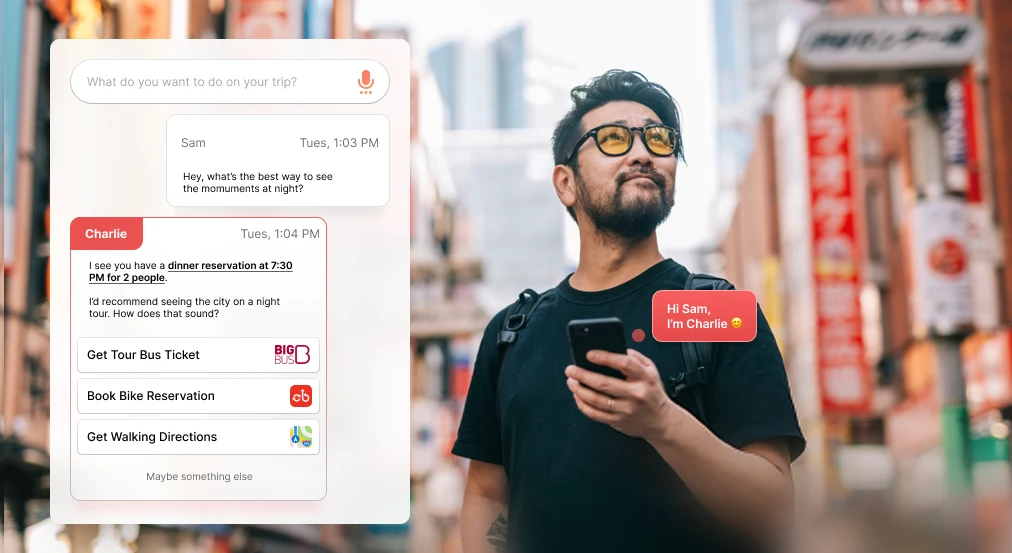
The bot got a name: Charlie. Charlie knows your plans and fills the gaps. Got dinner at 7:30? Charlie suggests a night tour of the monuments, then books the bus, the bike, or the walking route with one tap. Meeting tomorrow at 3:45? Charlie will call your ride about 30 minutes before.
Check in to the city
Every hotel, tour, or group got its own ihCode. Enter it, and that place shows up in your trip, with a direct line to the people there. “Your pillows are on the way” feels a lot better than waiting on hold with the front desk.
05 · The result
A concierge for the whole city
ihCities launched in Washington, D.C., with a handful of restaurants, tour operators, travel companies, and hotels on board. Visitors got one place to plan, explore, and ask for help. Venues without a concierge desk got a way to offer one, and the reviews that come with it.
Growth came the hard way: deep integrations with each venue, and a team on the ground making them work. In its first year, the app went from zero to about 10,000 monthly users.
Monthly users, December to December
0 → 10KPeople using ihCities each month, over 12 months
Start and end of the first year shown; growth came from venue integrations and a team on the ground in Washington, D.C.
Then came the bigger step: integrating with Hyatt’s hotel systems. Guests could use their digital room key, reach the hotel’s concierge, and get Charlie’s help around the city, all in one app. ihCities became the hotel’s concierge beyond the lobby. From there, the technology was folded deeper into its partners’ own systems, and it’s still in use today.
The front desk, the room key, and the city, in one pocket