Press Ganey
Transparency
AI-screened patient reviews
Health systems collect thousands of patient surveys. Transparency turns them into public reviews, safely screened and sorted by AI, so patients can choose with real information.
- Role
- Senior product designer
- Focus
- Healthcare, AI, Data

The problem
Health systems sat on thousands of honest patient surveys while a few loud reviews defined their doctors online
What I did
Designed the tools to publish surveys as reviews safely: privacy screening, AI sentiment, and one shared filter
What changed
Health systems like Nebraska Medicine publish every relevant review, and the bad ones made the good ones more believable
My part
- Designed the overview, comments queue, and safety flags
- Designed the AI sentiment summaries
- Created one filter pattern reused across products
- Designed recommendations that never act without a person
Who I worked with
- Senior product manager
- VP of product
- Front-end and back-end engineers
01 · Why it matters
Silence isn’t neutral
Patients pick doctors based on what other patients say. More than half won’t see a physician rated below four stars. And a provider’s online reputation exists whether they take part or not. A handful of angry reviews can define a great doctor, simply because no one else spoke up.
Meanwhile, health systems were sitting on thousands of honest patient surveys that no one outside could see.
Out of every 100 patients
Won’t book under four starsWould
55%Won’t see a doctor rated under four stars
Your reputation is already online. The only question is who's writing it
02 · The idea
Let the real feedback speak
Transparency publishes survey responses as reviews on provider profiles, right next to the official patient experience scores. Before anything goes live, every comment is screened for private health information, libel, and profanity.
The people running it are communications and patient experience teams, often with thousands of comments to get through each month. So the product has two jobs: keep patients and providers safe, and keep those teams fast.
The goals
- Paint an honest pictureVolume is what makes reviews believable.Every relevant survey response becomes a public review, not just the loudest few.
- Protect patients and providersPublishing health feedback carries real risk.Private details, libel, and profanity caught before anything goes live.
- Find the signal fastThousands of comments are useless if no one can read them.Filters, flags, and recommendations that put the important comments first.
03 · The work
Since you’ve been gone
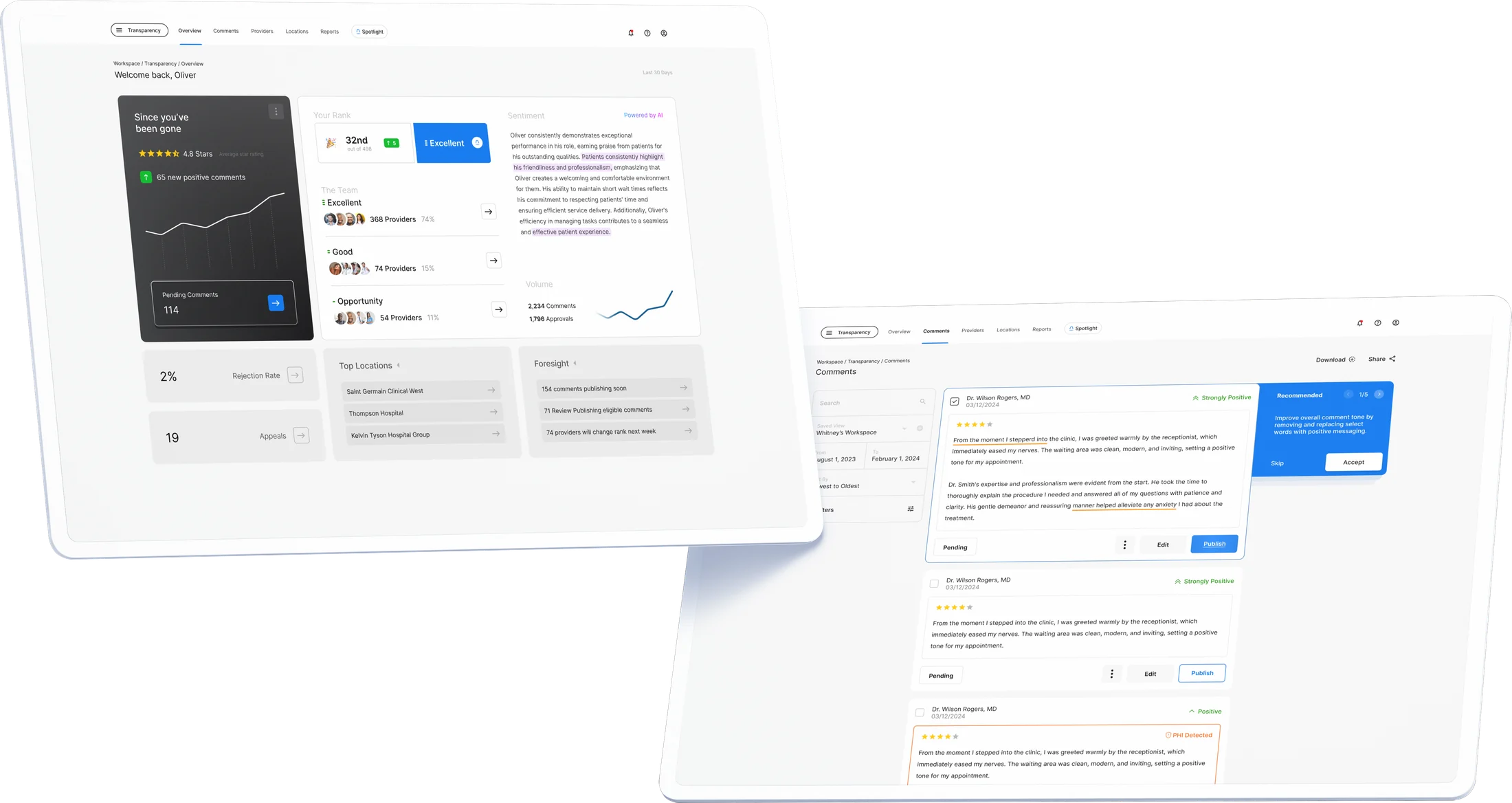
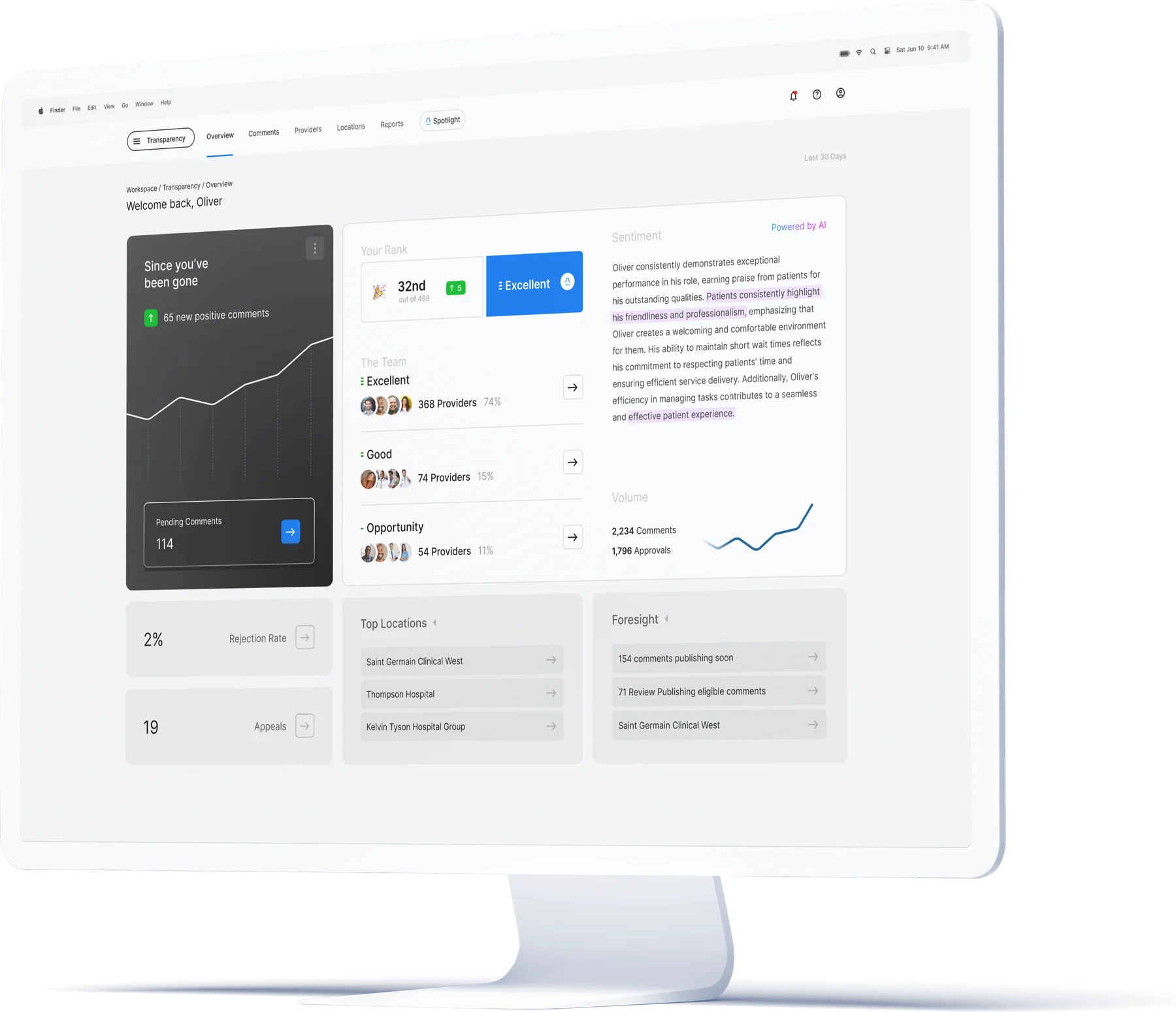
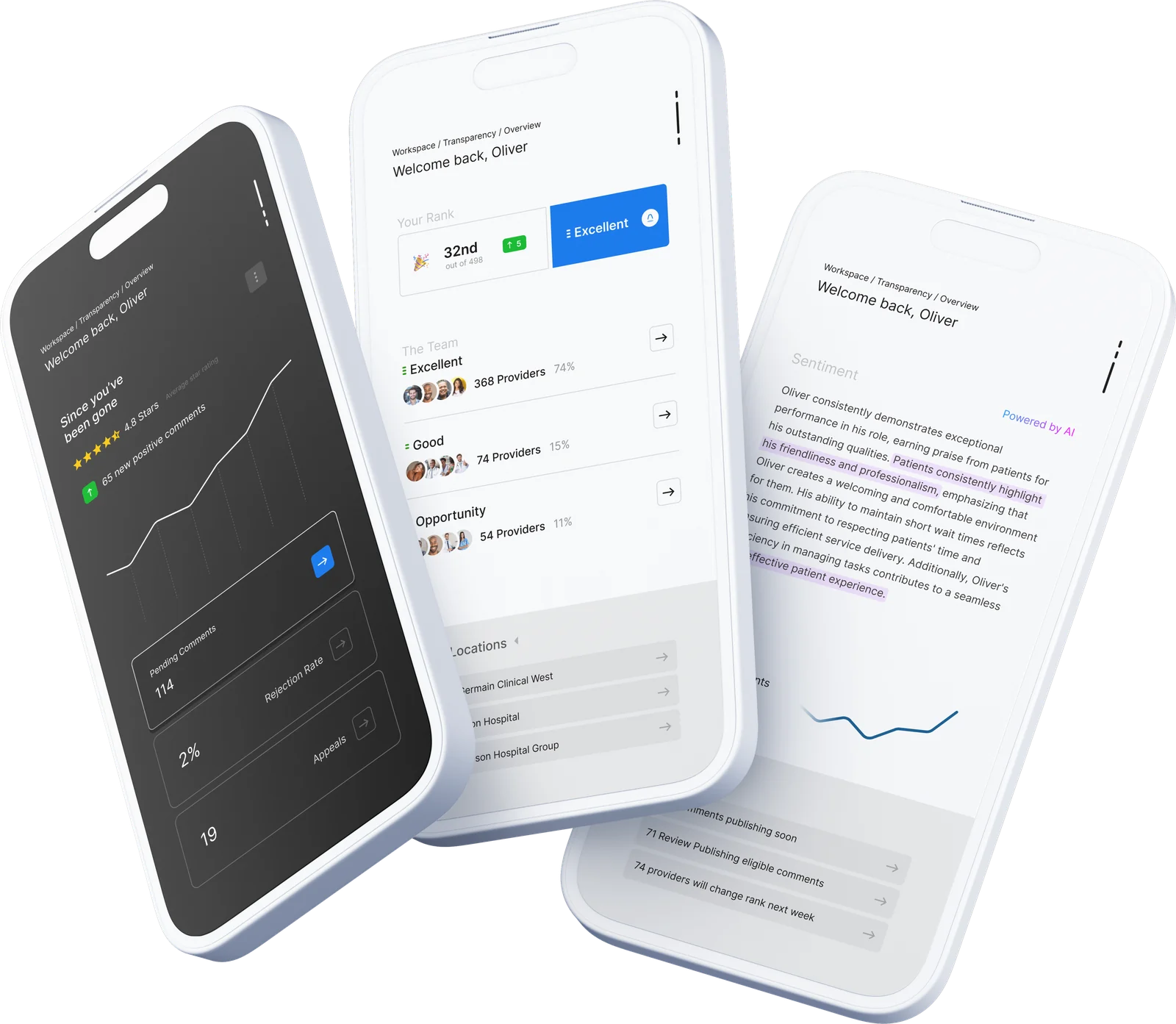
The overview opens with what changed, not a wall of charts: new positive comments, what’s waiting for review, and how the team is ranking. Below that, Foresight shows what’s about to happen, like comments publishing soon and providers about to move up or down.
Safety, before anything goes live
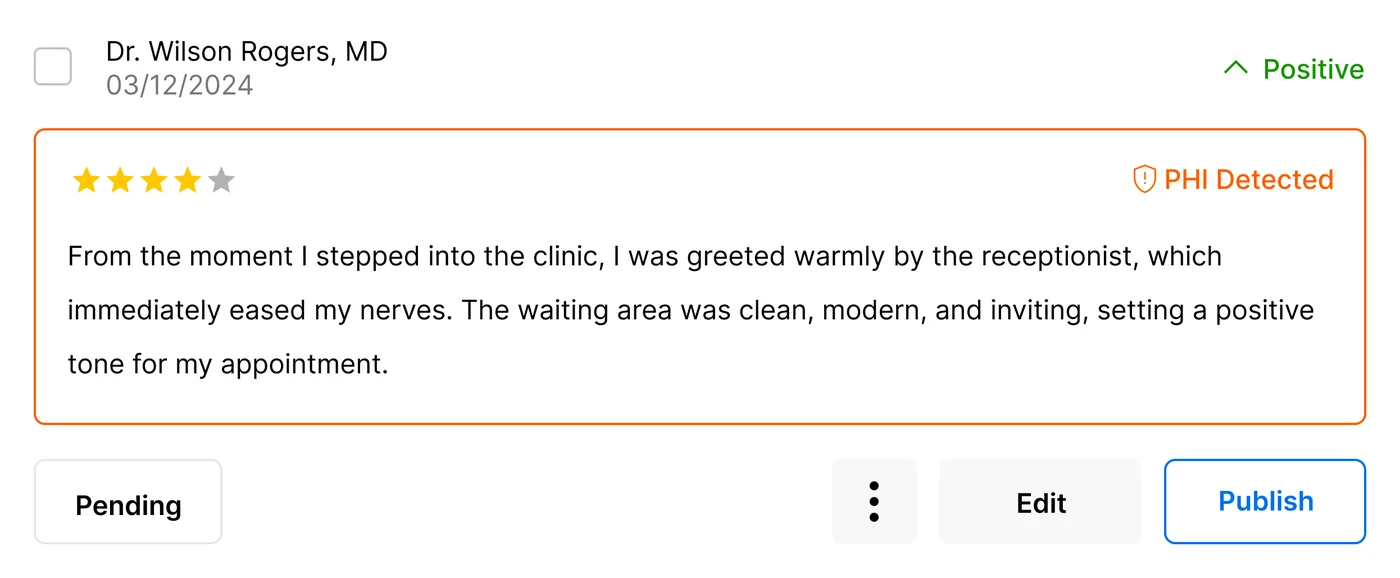
Every comment is checked before it’s published. If a patient mentions something private, the review is flagged right where the team is working, with a clear label and no way to publish it by accident.
One filter, everywhere
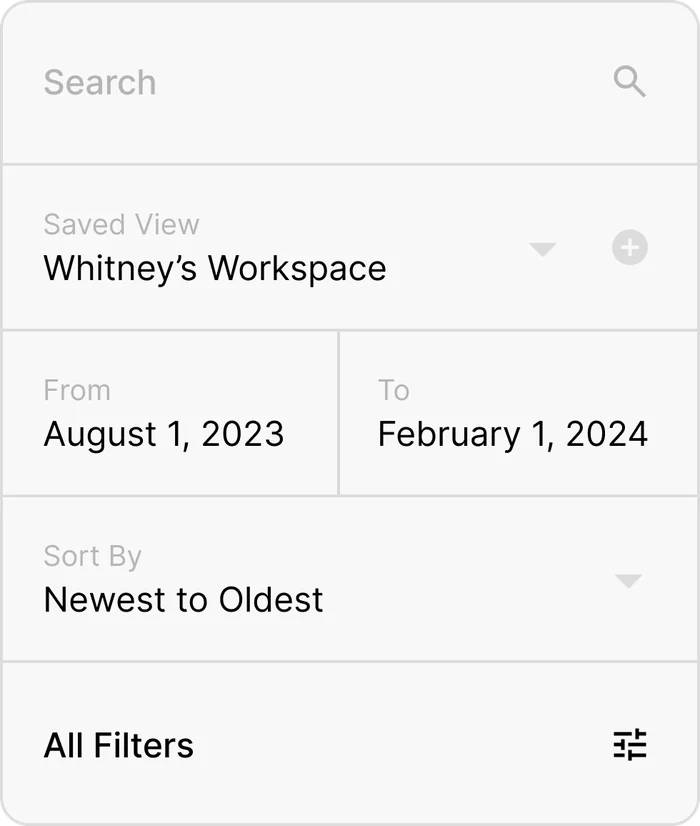
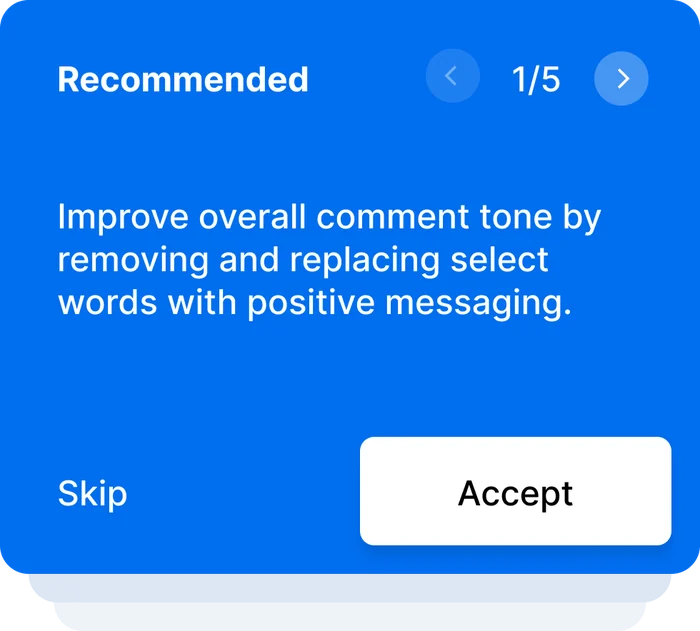
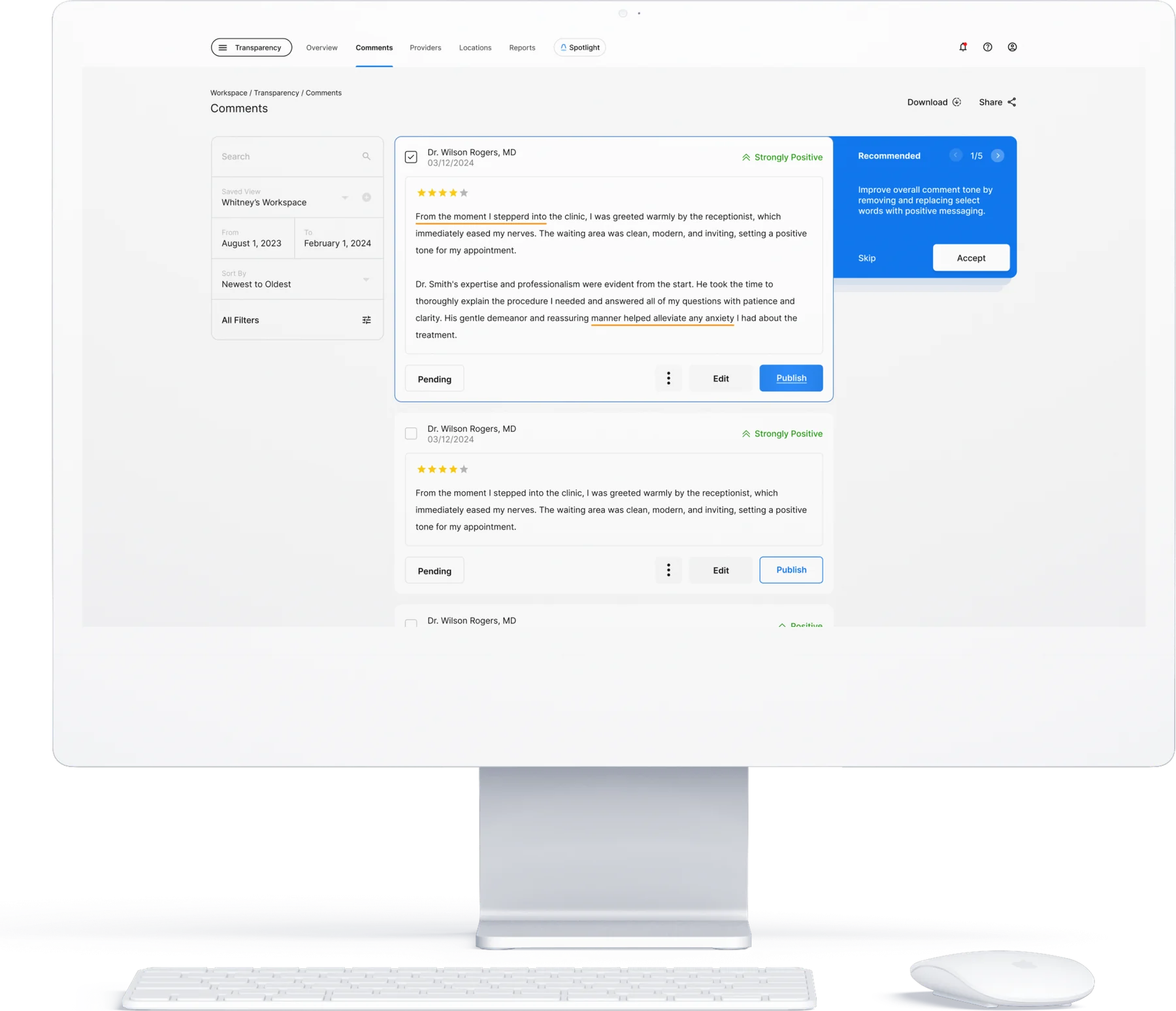
Teams look at the same slices of data again and again: one location, one date range, one saved view. The filter was designed once and reused across every page and product, so learning it once was enough. Recommendations sit beside the queue and suggest what to handle next, one at a time. Nothing changes until a person presses Accept.
Feelings, sorted
AI reads every comment and labels it by how the patient felt, from strongly positive to negative. Then it writes a short summary of what patients keep saying, with the key phrases highlighted. Recurring pain points show up on their own, without anyone reading reviews one by one.
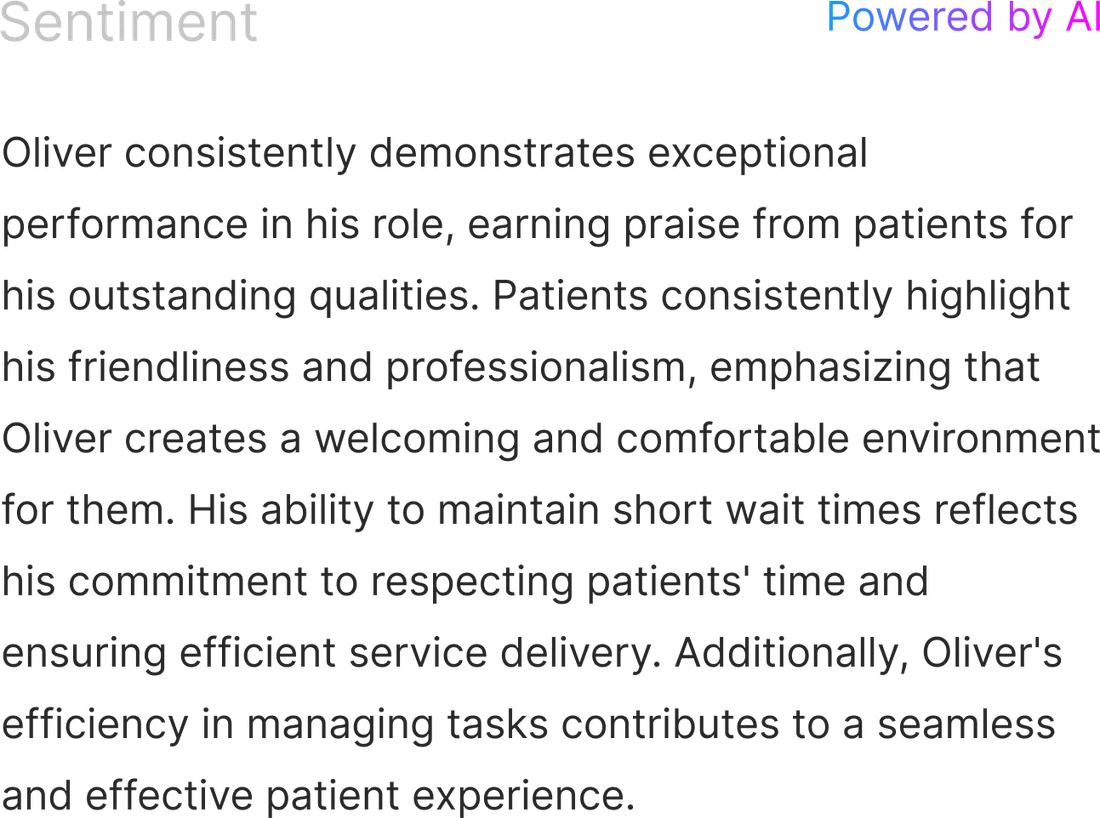
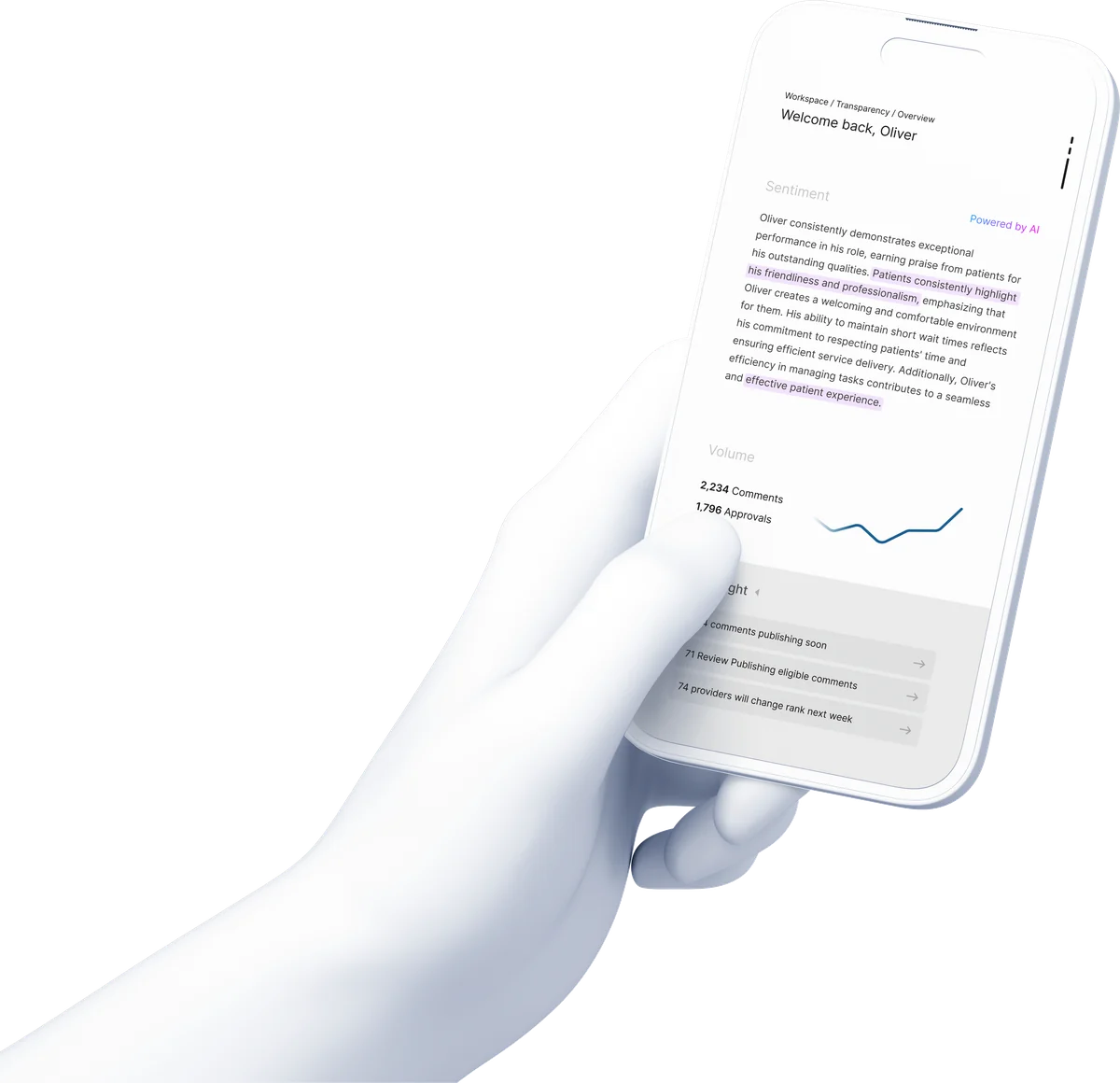
Thousands of comments become one clear answer: here's what to fix next
Fits in a pocket
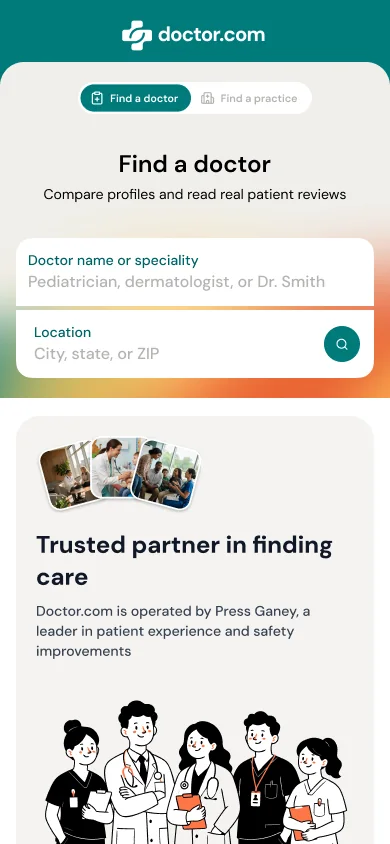
The same overview works on a phone, so a team lead can check what’s pending between meetings.
04 · The result
In their words
Nebraska Medicine publishes every relevant review, the good and the bad. Their team found that volume matters almost as much as the rating itself: a doctor with 300 real reviews is far more convincing than one with a handful. A steady flow of feedback also softens the occasional negative review, which patients tend to read as an outlier.
The surprise was that honesty won. Negative reviews made the positive ones more believable, and rarely stopped patients from booking.
Publishing the bad reviews made people trust the good ones